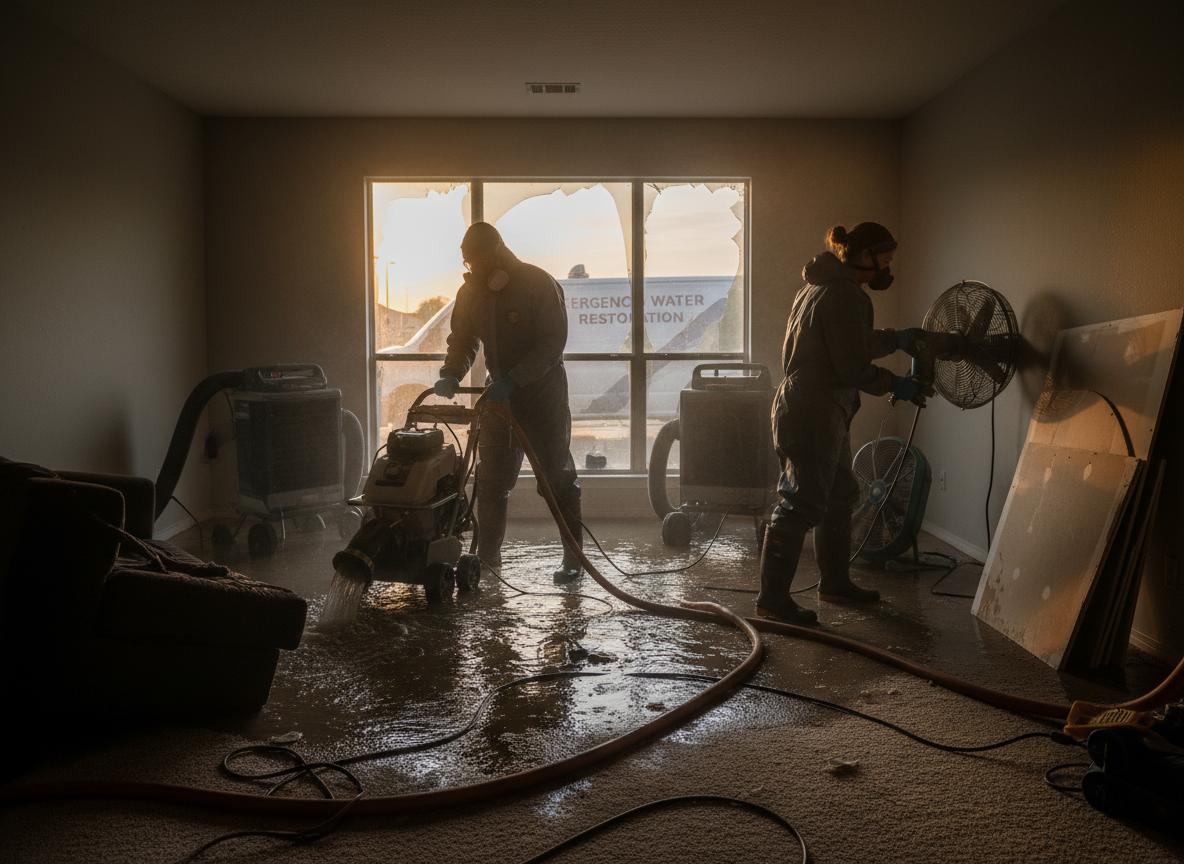
Grand Prairie homes in neighborhoods like Lake Ridge and Grand Peninsula often sit on clay-heavy soils that shift after heavy thunderstorms, allowing water to seep under slabs or through foundation cracks. Summer storms hit hard and fast, saturating attics and walls before residents notice. Older housing stock from the 1970s and 1980s around Lone Star Park frequently has outdated plumbing that fails under pressure changes common in Dallas County. Technicians must pull carpet, remove baseboards and use moisture meters on drywall to prevent hidden mold growth that thrives in the humidity left after mild winters.
Extraction equipment must handle both clear floodwater and contaminated sewage backups that occur when storm drains near Grand Prairie Premium Outlets overwhelm. Hot summers accelerate bacterial growth in standing water, so crews prioritize rapid removal within the first 24 hours. In multi-story homes common near Lake Ridge, water migrates through HVAC returns and electrical chases, requiring negative air machines and targeted drying to meet Texas building code standards for moisture levels below 15 percent. Skipping these steps leads to repeated claims and structural rot in the area's wood-framed construction.
Technicians document every step with photos and moisture logs because insurance adjusters in Dallas County require proof of origin and scope before approving drying equipment. Properties near major roads experience vibration that can worsen small leaks into full emergencies during thunderstorm season. Proper disposal of saturated materials follows local landfill rules to avoid fines, and crews coordinate with Grand Prairie code enforcement when electrical systems are involved.
Technician insight
In Grand Prairie the thing that catches most people out with Emergency Water Damage Restoration is how quickly thunderstorm runoff soaks into the clay soil around slab foundations in Lake Ridge and Grand Peninsula. Homeowners often stop at visible puddles and miss water that has wicked up into base plates and HVAC returns, especially in 1980s homes near Lone Star Park. We always pull at least two feet of drywall and run moisture checks for a full week because the mild winters never give the structure time to dry naturally.
Lake Ridge Storm Backup
Heavy rain overwhelmed a drain line behind a Lake Ridge home, sending Category 3 water into the finished basement. Crews extracted standing water, removed saturated carpet and drywall, then ran drying equipment for five days while monitoring humidity levels. The homeowner avoided mold growth and insurance covered the full scope after documented moisture logs.
Emergency Water Damage Restoration Services We Offer
✓Burst Pipe Water Extraction
Immediate removal of water from burst supply lines common in Grand Prairie's older homes, followed by drying to protect flooring and subfloors.
✓Storm Flood Cleanup
Extraction and decontamination after heavy thunderstorms that flood yards and crawl spaces in Lake Ridge and Grand Peninsula neighborhoods.
✓Sewage Backup Restoration
Safe removal and sanitization of contaminated water from overwhelmed drains near Grand Prairie Premium Outlets and commercial zones.
✓Ceiling and Wall Drying
Targeted drying of water that migrates through ceilings and walls after roof leaks or upstairs overflows in multi-story Dallas County homes.
✓Slab Leak Water Removal
Detection and extraction under concrete slabs affected by shifting clay soils in Grand Prairie, preventing long-term foundation damage.
Emergency Water Damage Restoration Cost in Grand Prairie, TX
| Service | Typical Range | What Affects It |
|---|---|---|
| Category 1 water extraction | $800–$2,200 | Clear water from supply lines; price rises with square footage and number of rooms |
| Category 3 sewage cleanup | $1,800–$4,500 | Contaminated water requiring full PPE and disposal; common after storms |
| Slab leak drying package | $1,200–$3,000 | Includes equipment rental and monitoring; clay soil jobs take longer |
| Emergency board-up or tarping | $350–$750 | Secures openings after storm damage near Lake Ridge |
Ranges are typical for Grand Prairie, TX and confirmed with an exact written quote before any work starts.
How it works
- 1
Emergency Assessment
Arrive on site, locate the water source and measure moisture levels in affected materials using meters calibrated for local humidity.
- 2
Water Extraction
Remove standing water with truck-mounted pumps and portable extractors suited to Grand Prairie's residential layouts.
- 3
Drying And Dehumidification
Place air movers and dehumidifiers to bring moisture below 15 percent while monitoring daily in hot summer conditions.
- 4
Sanitization And Final Check
Apply antimicrobial treatments where needed and verify dryness before allowing re-entry or reconstruction.
Pricing
Upfront quotes after inspection; costs vary by water category, affected square footage and drying duration.