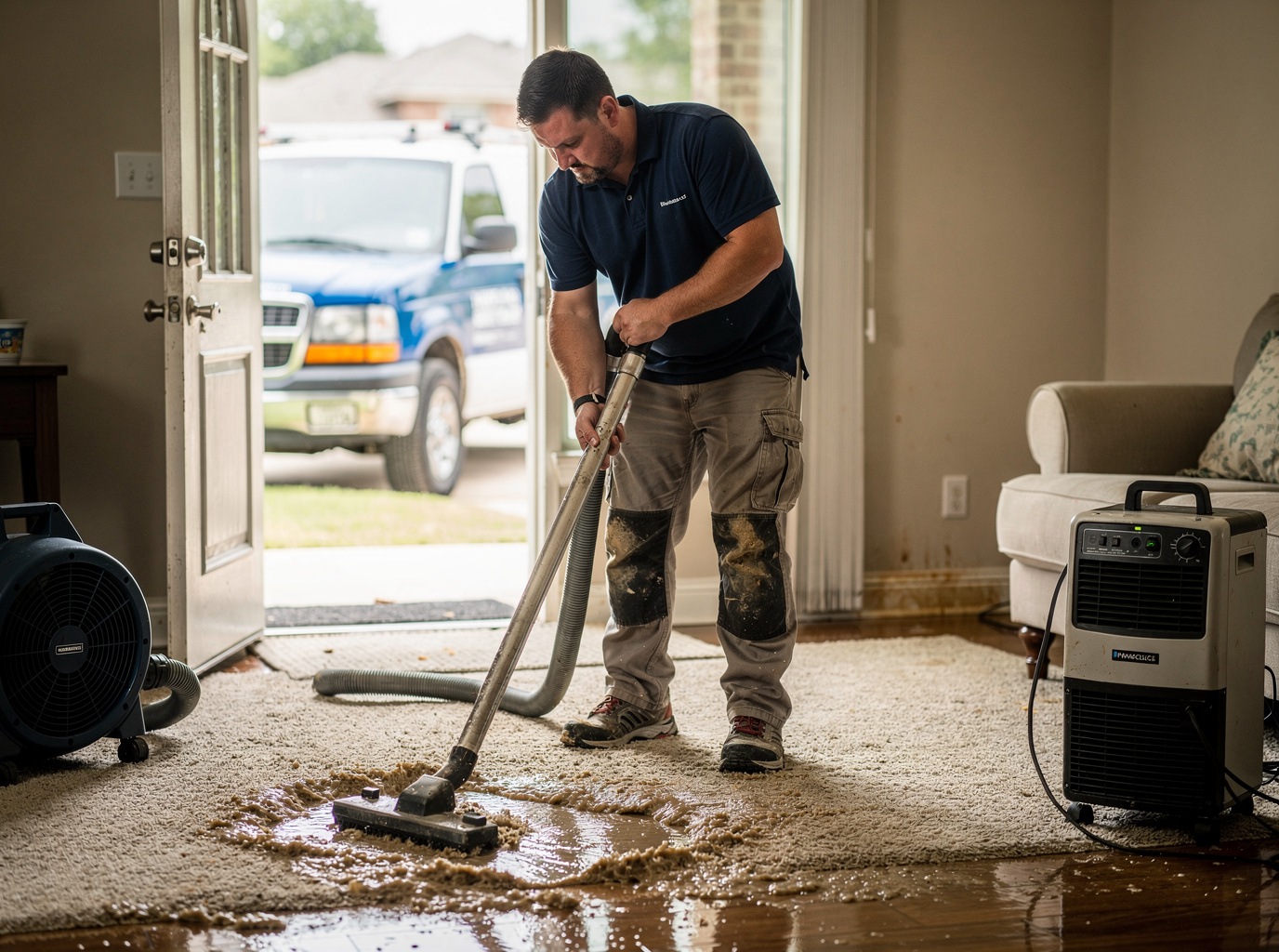
Garland sits in the southern part of Grand Prairie with many 1970s-1990s brick and frame homes on slabs that sit low to the ground. Summer thunderstorms dump heavy rain fast, and older gutters plus flat lots around Lake Ridge often push water toward foundations. When pipes burst or roofs leak during those downpours, water travels under cabinets and into drywall before residents notice.
Our crew reaches Garland via Lake Ridge Parkway or I-20 within minutes from our 113th Street shop. We set up air movers and dehumidifiers the same day, pull wet carpet pads, and cut out damaged sheetrock so the home dries before mold sets in. Mild winters here mean fewer freeze breaks but more humidity after storms, so we monitor moisture readings longer than in drier parts of Dallas County.
Homeowners in Grand Peninsula and nearby Garland streets call us for both sudden leaks and repeated seepage after heavy rain. We map the water path through each slab home, use moisture meters on concrete, and return to confirm readings stay low before any rebuild work starts.
Around Garland
We regularly work near:
- 📍Lake Ridge Parkway
- 📍Garland Road at I-20
- 📍Lake Ridge Elementary
- 📍Mountain Creek Park
- 📍Grand Peninsula entrance
Water Damage Restoration in Garland — Local Notes
- •Many Garland lots slope toward the street with poor side-yard drainage, so storm water pools against brick foundations and wicks into lower drywall.
- •Slab homes from the 1980s here have limited crawl-space access, forcing us to rely on perimeter drying and subfloor inspection rather than under-house equipment.
- •Thunderstorms hit Garland harder than northern Grand Prairie because of the slight elevation drop near Lake Ridge, increasing calls for carpet and pad removal after each event.
- •Narrow driveways and fenced backyards in the neighborhood limit equipment placement, so we stage dehumidifiers through front doors and run hoses along sidewalks.