2026-11-11 · Jim Whitaker
Checking Attics for Hidden Moisture After Grand Prairie Heat Waves
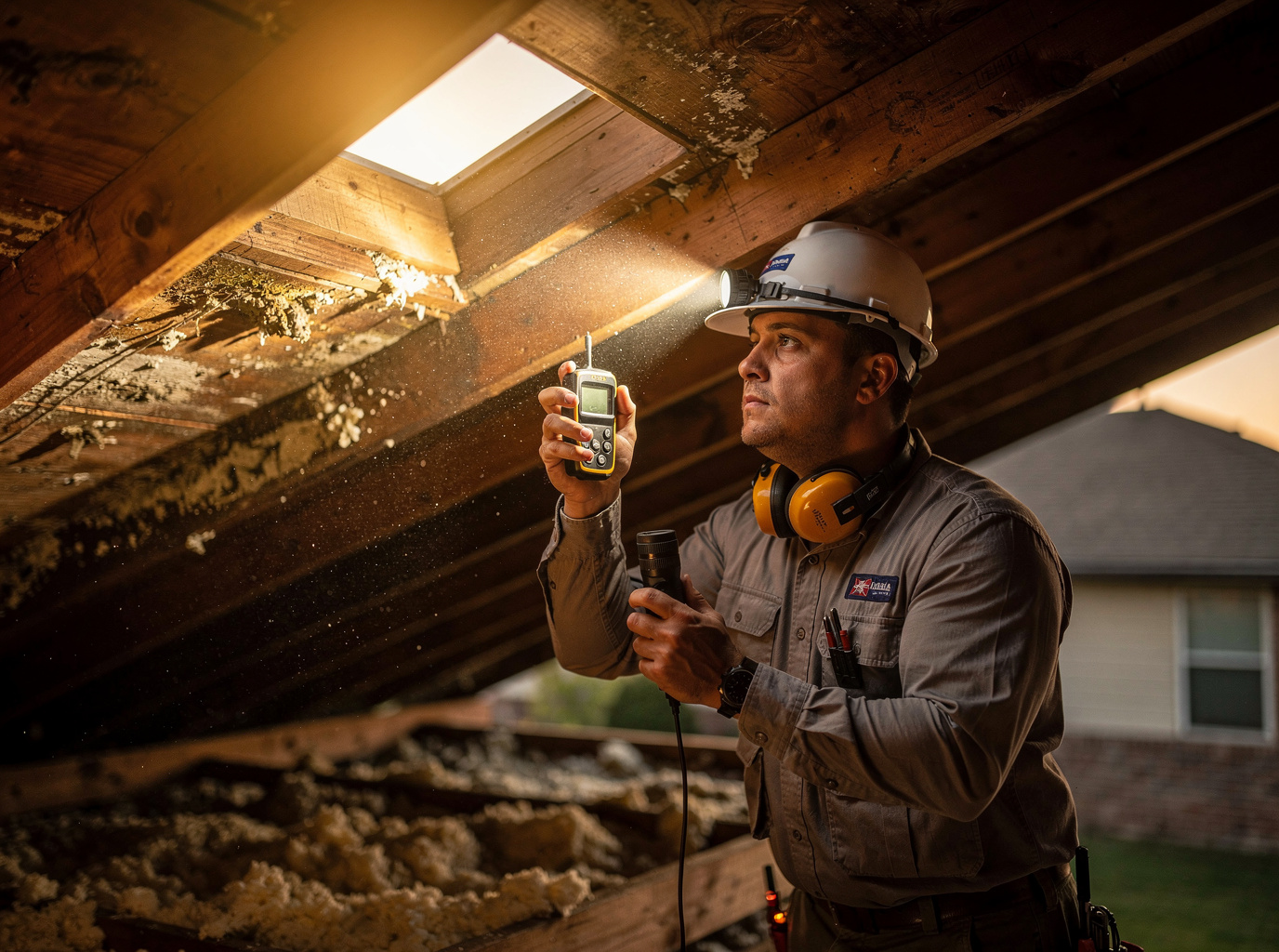
After Grand Prairie heat waves, inspect your attic for hidden moisture within 48 hours once temperatures drop and thunderstorms move in, focusing on roof decks, insulation, and HVAC lines in homes built before 1990 near Lake Ridge and Grand Peninsula.
Why Heat Waves Lead to Condensation in Grand Prairie Attics
Hot summers push attic temperatures above 130 degrees in single-story homes across Dallas County, then mild winter shifts or evening thunderstorms create rapid cooling that traps moisture on sheathing and fiberglass batts. This cycle repeats after each heat wave, especially in neighborhoods around Grand Prairie Premium Outlets where many 1970s-1980s houses have vented attics with limited ridge ventilation. The result shows up as dark streaks on OSB or mold on cellulose near bathroom exhaust fans. Local terrain with clay soils holds humidity longer after storms, making attic checks essential before moisture migrates to ceilings in Lake Ridge properties. Without prompt inspection, repeated cycles shorten roof deck life and raise humidity levels that affect entire second floors.
Common Signs of Hidden Moisture After Heat Waves
Look for these indicators during summer inspections in Grand Prairie homes: darkened plywood around plumbing vents, sagging insulation near HVAC returns, or white mineral deposits on rafters from evaporated condensate. In areas like Grand Peninsula, check where metal flashing meets brick chimneys, as heat expansion followed by thunderstorm rain often leaves small gaps. Musty odors rising through ceiling registers after the AC cycles off signal trapped moisture in the insulation layer. Homeowners near Lone Star Park frequently find water stains on collar ties above laundry rooms because high attic heat forces AC condensate lines to sweat more than in milder climates. Document each sign with photos before opening any insulation to avoid spreading spores.
Step-by-Step Attic Inspection Process
Start by turning off power to attic lights and using a bright LED headlamp for safety. Enter through the access hatch after the attic has cooled for at least four hours post-heat wave. Scan the underside of the roof deck with a moisture meter set to wood mode, recording readings above 18 percent near the south-facing slopes common in Dallas County homes. Pull back a 2-foot section of insulation every 10 feet along the perimeter to inspect for wet sheathing, then replace it loosely. Check bathroom and kitchen exhaust ducts for disconnected joints that allow humid air to condense on rafters during temperature swings. Finish by examining the HVAC platform for standing water in the secondary pan, a frequent issue after extended heat waves in Grand Prairie.
When Professional Water Damage Restoration Is Needed
If moisture meter readings exceed 20 percent or visible mold covers more than 10 square feet, contact a local team for water damage restoration rather than attempting DIY drying. Homes in older sections of Grand Peninsula often require negative air machines and dehumidifiers sized for 1,800-2,400 square foot attics to pull humidity below 50 percent within 72 hours. Technicians familiar with Dallas County clay soil conditions also address exterior grading that channels thunderstorm runoff toward foundations, preventing future attic intrusion. For related summer storm guidance, review what to do after summer thunderstorms flood Grand Prairie yards. Early intervention protects both the structure and indoor air quality before the next heat wave arrives.
Preventing Future Moisture Issues in Local Homes
Improve attic ventilation by adding 1 square foot of net free vent area per 150 square feet of attic floor in pre-1990 Grand Prairie houses. Seal and insulate recessed can lights with IC-rated covers to stop conditioned air from escaping into the attic during peak summer loads. Schedule annual checks of HVAC condensate lines before June, as these lines clog faster after heat waves when AC units run nonstop. Residents near Lone Star Park benefit from radiant barrier installation on the underside of rafters, which lowers attic temperatures by 10-15 degrees and reduces condensation risk after evening thunderstorms. These steps address the specific weather patterns of hot summers and mild winters that define water damage patterns in Dallas County.