2026-11-11 · Jim Whitaker
What to Do After Summer Thunderstorms Flood Grand Prairie Yards
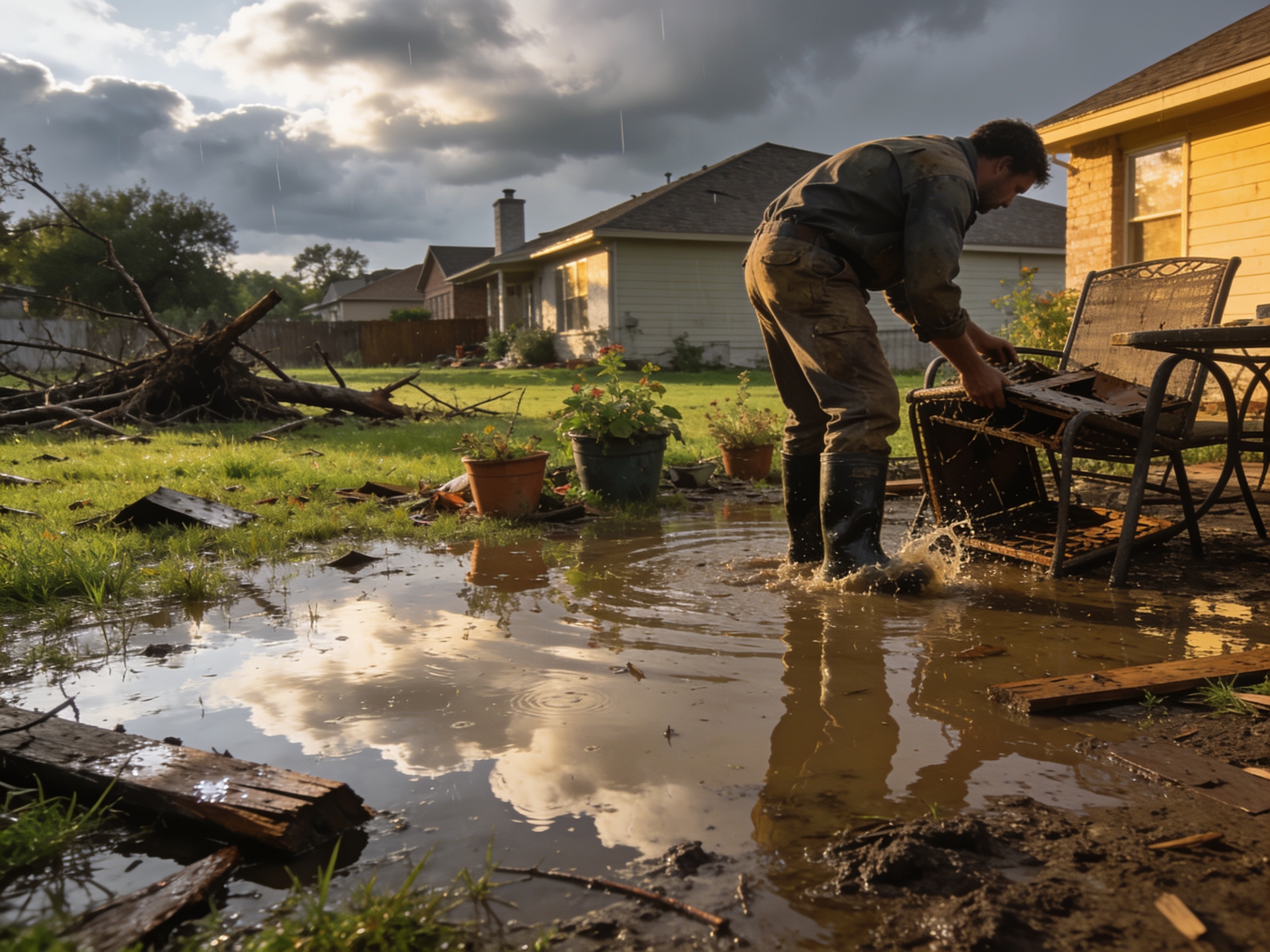
After summer thunderstorms flood Grand Prairie yards, prioritize safety by avoiding electrical hazards and standing water, then remove pooled water within 24 to 48 hours while monitoring for hidden moisture in soil and crawl spaces around Lake Ridge and Grand Peninsula.
Evaluate Safety Risks First
Thunderstorms in Grand Prairie bring heavy rain that saturates clay-heavy soils common in Dallas County, creating slippery surfaces and potential electrical dangers near outlets or outdoor wiring. Walk the perimeter of your property in Lake Ridge only after the storm passes and power is confirmed off to affected areas. Check for downed lines or debris from winds that often accompany these events near Lone Star Park. If water reaches foundation levels in older single-story homes typical of Grand Peninsula, note any shifts in grading before proceeding. Document conditions with photos for insurance purposes but stay clear of deep pools that could hide hazards.
Remove Standing Water Promptly
Use pumps or wet vacuums to extract water from yards before it seeps toward home foundations, especially in low-lying spots near Grand Prairie Premium Outlets where drainage can be slow. Focus on areas where water pools for more than a few hours, as mild winter patterns here give way to intense summer bursts that overwhelm standard gutters. Divert flow away from structures using sandbags or temporary barriers if needed. In neighborhoods like Grand Peninsula, redirect water toward street drains to avoid neighbor conflicts. This step prevents saturation that leads to erosion on sloped lots common throughout Dallas County.
Dry Soil and Check for Hidden Issues
Aerate compacted soil after extraction to speed evaporation during hot summer days that follow storms, targeting depths where moisture lingers in Grand Prairie's clay terrain. Monitor for soft spots near driveways or patios that could indicate subsurface water movement toward homes. Water damage restoration becomes relevant if moisture migrates indoors, while water damage repair addresses any early foundation cracks. Inspect attics for condensation carryover from humidity spikes, following guidance in Checking Attics for Hidden Moisture After Grand Prairie Heat Waves. Track drying with moisture meters over several days rather than assuming surface-level fixes suffice.
Protect Foundations and Prevent Recurrence
Regrade yards to slope away from foundations at a minimum 6-inch drop over 10 feet, a adjustment that counters the flat terrain challenges in many Grand Prairie subdivisions. Install French drains or extend downspouts in Lake Ridge properties where repeated flooding occurs due to poor original grading. Clear debris from storm drains near Arlington borders to improve flow during future events. These measures reduce long-term soil pressure on basements or slabs in Dallas County homes built decades ago. Consistent maintenance after each thunderstorm season keeps water from undermining landscaping or hardscapes around the Grand Peninsula area.